Burnt Out Parenting: How to Build Support When You Don’t Have a Village
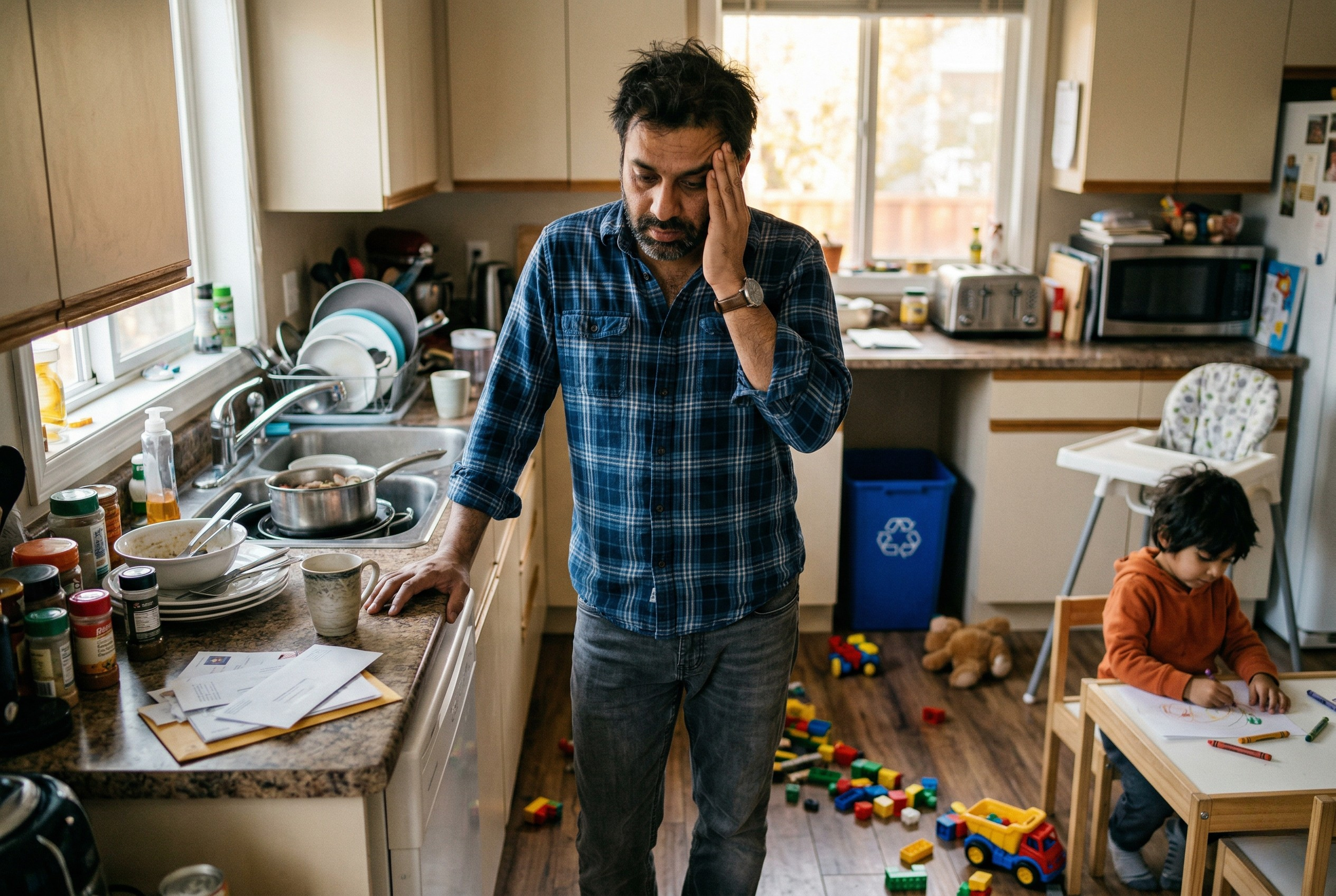
There is a particular kind of exhaustion that comes with parenting when you are already running on empty. Not just tired. Not just in need of a break. But the kind of burnout where everything feels heavy, even the things you love.
If you are feeling overwhelmed, overworked, and under supported, you are not alone. And you are not doing it wrong.
A lot of the parents I work with are doing some version of solo parenting, even if they technically have a partner. They are carrying the invisible labor, the mental load, the planning, the anticipating, the remembering. They are the default. The one who knows the shoe size, the snack preferences, the emotional temperature of the house.
And somewhere along the way, the idea of a “village” starts to feel more like a myth than something real.
Especially if your story includes estrangement from parents, complicated family dynamics, or the reality that generational support is not available to you in the way it is for others.
So now you are here. Burnt out. Under supported. And being told you need to build support.
It is a hard sell.
Because let’s be honest. Being told to “build a village” when you are already drowning can feel like being handed another job.
The part no one says out loud
Building support requires energy.
It requires you to:
Name what you need
Let someone see that you are struggling
Risk being misunderstood
Risk someone trying to show up and getting it wrong
Sit in the discomfort of not being fully self-sufficient
That is not small. That is emotional vulnerability. That is risk.
So if part of you resists this idea, it makes sense.
You are not lazy. You are not avoiding connection. You are protecting yourself from more disappointment, more effort, more emotional labor.
Why you might not have a “village”
Before we jump to solutions, it matters to name the context.
Some people do not have support because:
There is estrangement from parents or family
Generational support was never modeled or available
You are cycle breaking and refusing to rely on unhealthy dynamics
You have moved away from your original community
Your friendships are stretched thin by similar demands
You have been the one who always shows up for others
Maybe your family has ongoing chronic illness or needs that require unique or specialized support
This is not just about effort. This is about systems, history, and capacity.
And if you are cycle breaking, there is an added layer. You are not just parenting your child. You are rethinking how support, boundaries, and care even work in the first place.
That takes a lot of energy.
The invisible labor you may still be carrying
When you are burnt out, it is worth asking a hard question.
What are you doing that is not actually yours to carry?
Invisible labor has a way of expanding quietly. You pick things up because it is easier than asking. You anticipate because no one else does. You manage because the alternative feels like things will fall apart.
But sometimes burnout is not just about needing more support. It is about needing to offload what never should have been yours in the first place.
This might look like:
Letting a partner take full ownership of something, even if they do it differently
Not fixing or smoothing over other adults’ responsibilities
Questioning expectations you have internalized about what a “good parent” does
Releasing tasks that are about other people’s comfort, not your capacity
Support is not only what you add. It is also what you stop carrying.
So how do you build support when you feel like this
Not all at once. Not perfectly. And not by forcing yourself into a version of connection that does not feel safe.
You start smaller than you think you should.
1. Get honest about what you actually need
Not what sounds reasonable. Not what feels easiest to ask for.
What would actually help?
More time alone? Practical help with your kids? Emotional support? Fewer responsibilities?
Clarity matters here. “I need support” is hard for people to respond to. “Can you take the kids for an hour on Saturday?” is something someone can say yes or no to.
2. Identify who is realistically available
This is where it can feel tender.
Not everyone can meet your needs. Some people do not have the capacity. Some are not safe to rely on. Some will disappoint you.
But there are often a few people who could show up in small ways if given the chance.
Think in layers:
Who is emotionally safe
Who is practically available
Who has made offers I have not pursued
Who has shown up even a little in the past
You are not building a perfect village. You are identifying possible points of support.
3. Let it be awkward and imperfect
People might get it wrong.
They might offer solutions when you wanted listening. They might show up inconsistently. They might not fully understand your experience.
That does not mean it is not worth doing.
Part of building support is tolerating some imperfection without shutting down completely.

Small steps to show up for others
This might feel counterintuitive when you are already stretched thin, but connection is reciprocal in small ways, not big overwhelming ones.
Send a quick text checking in
Share a resource or recommendation
Sit with another parent at the park instead of isolating
Offer a low-effort hang like a walk or playground meetup
Be honest about your capacity so resentment does not build
You are not overextending yourself. You are staying in relationship in ways that feel sustainable.
Small steps to show up for you
This is the part that often gets skipped.
Ask for one specific thing this week
Say no to one thing that drains you
Take 10 minutes of actual alone time without multitasking
Notice when you are overfunctioning and pause before stepping in
Let something be good enough instead of perfect
These are not dramatic changes. But they are how you start shifting out of survival mode.
The grief that comes with this
There is often grief here.
Grief for the kind of generational support you did not have. Grief for parents you cannot rely on. Grief for the version of parenting you thought you would have.
You can be building support and still feel sad that it is not easier.
Both can be true.
You are allowed to need more than this
If you are feeling constantly overwhelmed, constantly under supported, constantly on the edge of burnout, that is not a personal failure.
It is a sign that something in your system needs to change.
Support is not a luxury. It is part of sustainable parenting.
And if building that support feels hard, slow, or uncomfortable, it does not mean you are doing it wrong. It means you are doing something new.
You do not have to keep carrying all of this alone.
If this resonates, therapy can be a place where you start to unpack the mental load, the invisible labor, and the patterns that keep you over functioning. It can also be a space to practice asking for support in a way that actually feels doable in your real life.
You deserve support that feels real, not theoretical. And you deserve it before you are completely burnt out.
If you’re finding it difficult to incorporate these strategies into your life or need more personalized support, please feel free to reach out.
Share your thoughts in the comments, or get in touch with me directly. We can work together to create a practical, easy-to-use toolkit of coping skills tailored just for you.